A rail corridor is every asset class, end to end.
Bridges, tunnels, stations, cuttings and unattended equipment rooms, strung out over kilometres and inspected in the windows the timetable allows. SapienOS watches the corridor between those windows — continuously, on one record.
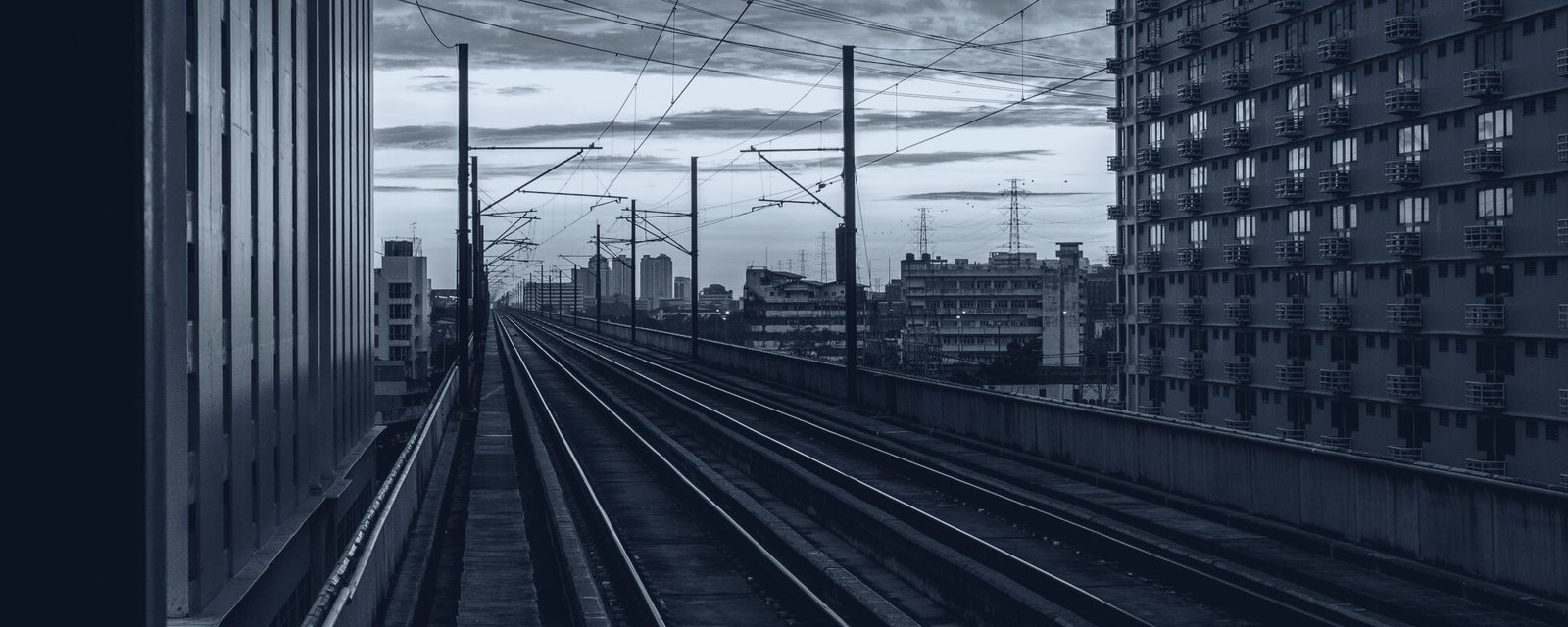
Kilometres of assets, hours of access
The corridor outruns the inspection
A single line strings together bridges, tunnels, stations, earthworks and plant over distances no team can walk often. Access comes in possessions and inspection windows — short, scheduled and expensive — while the assets sit unwatched in between.
Unattended rooms fail quietly
Signalling, comms and switch rooms along the corridor run for weeks without a visit. When heat or damp starts to build, nobody is there to notice — too often the first indication is the fault itself.
Between walks, nothing is written down
What an inspection finds gets recorded. What happened in the months before it doesn't. When a defect surfaces, there's no measured history of when conditions changed — only the gap between two walk-throughs.
A continuous watch between the walks
Tunnel and station environment — and gas
Temperature, humidity and pressure in tunnels, underground stations and service corridors, with continuous methane detection built on industrial methane sensing heritage — alerting that backs up your gas-safety and confined-space procedures, never replacing them.
Eyes on the equipment rooms
Temperature and humidity in signalling, comms and switch rooms, monitored continuously so drift shows up as a trend, not a fault. SapienOS watches the room's conditions — it never connects to the signalling itself.
Records for new structures
Curing conditions and site environment for new bridges, decks and station structures, captured during construction — every reading authenticated with a per-device key and signed at the gateway, and handed over with the asset.
Structural movement monitoring
Movement monitoring for bridges, cuttings and embankments — the early warning you want on the earthworks that worry you — is in development: on the roadmap, not available today. The platform watching your corridor's conditions now is built to grow into it.
In developmentOne record for the whole line
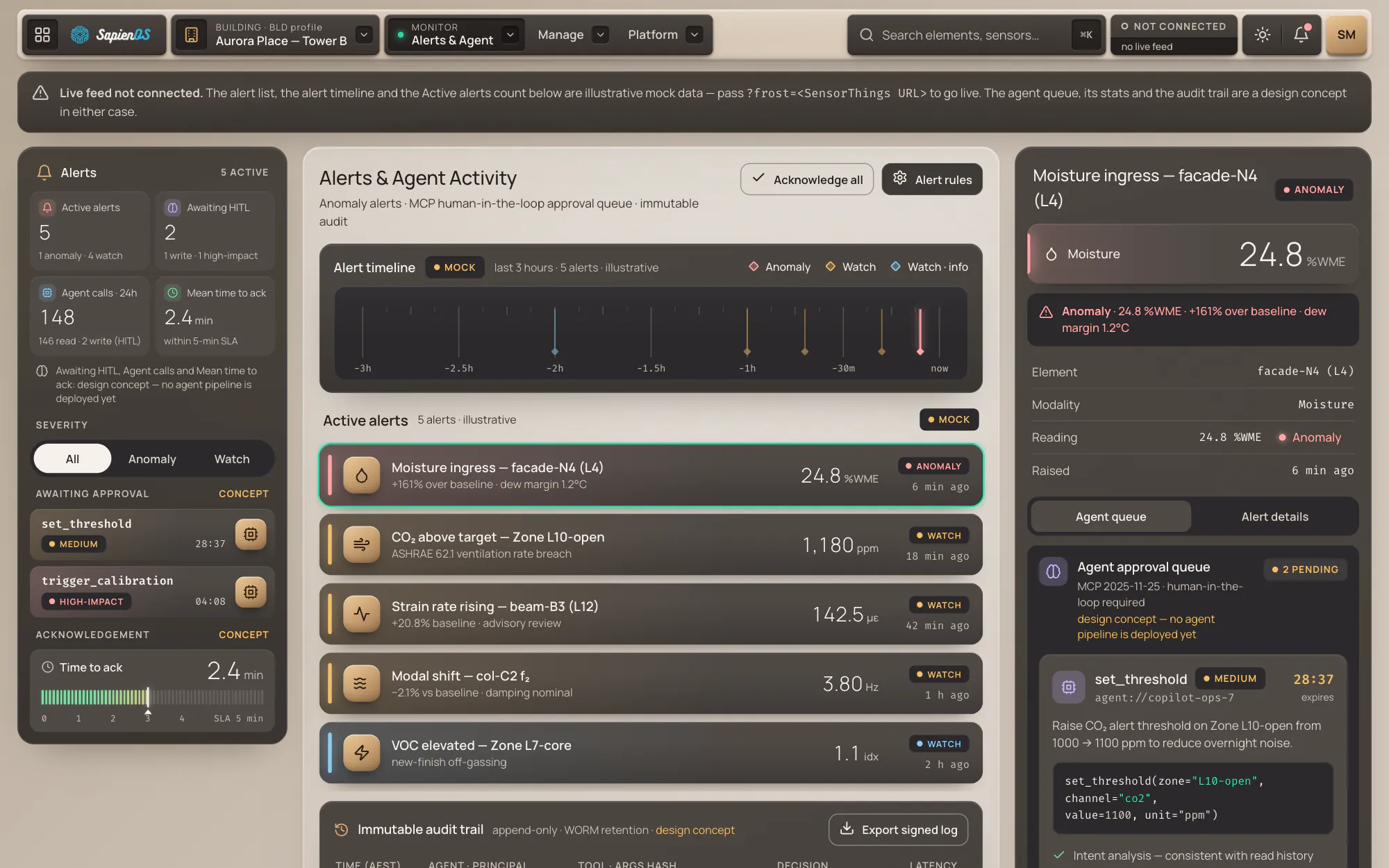
The corridor in one view
Every monitored site along the line — tunnels, stations, equipment rooms — in one browser dashboard: what's normal, what's drifting, and what tripped an alert.
Alerts that know their kilometre
When a space drifts from its normal, the alert carries the location and the readings — so the crew that travels out goes to the right site, informed before they arrive. Advisory context, never a substitute for your procedures.
Evidence between inspections
A continuous, authenticated history of each monitored asset — the measured record of what happened between the walks, ready for audits, incident reviews and handover.
Going deeper on one asset class? See the tunnels & underground and roads & bridges use cases.
Start with one tunnel, one station or one room
Pilot partnerships are open for rail operators, maintainers and their contractors — continuous environment and gas monitoring on a real asset, with a record you can point to.